
On the move that changed everything—and how London became the first place that truly felt like mine.

The Turning Point—When Study Became a Stepping Stone
By the time I finished school, I already knew I wanted to study history and archaeology. The past fascinated me—the way fragments could tell entire stories if you learnt how to listen. But my grandmother had other plans. She refused to pay for me to study what she called a hobby for the unemployed.
We had a standoff that summer. I told her I’d rather not study at all than follow a path I didn’t believe in. She called my bluff—and, as usual, she won.
A friend eventually convinced me to join her on a degree in Business Management and Tourism. She said I was good with languages and had a natural curiosity about people and places. It wasn’t the life I’d imagined, but it was a door that opened when others had closed.
I wasn’t a particularly good student at first. I coasted through my first year half-heartedly, feeling resentful and trapped. But something shifted along the way. Maybe it was the awareness that this wasn’t free education anymore—that my grandmother was paying for it, expecting results. Or maybe it was the quiet realisation that finishing this degree meant more than a piece of paper; it meant freedom.
By the time I graduated, I’d not only found my rhythm—I finished in the top five of my class. To this day, I’m still not sure what changed: discipline, pride, or simply the desire to move forward. Perhaps it was all three.
The Discovery—When Work Became a Window
As part of the degree, I had to complete a placement in a hotel in my hometown. I expected it to be tedious, but it turned out to be the opposite. There was something oddly magnetic about the environment—people constantly arriving and departing, conversations in different languages, stories brushed against in passing.
I found myself fascinated by the movement of it all—the quiet choreography of check-ins, suitcases, and transient connections. Maybe it was the link to travel, or maybe it was the sense that I could be part of a world larger than the one I knew.
After university, I wasn’t ready to settle. My friends were still studying, and I wasn’t quite ready to begin what everyone else called “real life.” I had an offer from a university in Canberra to study further—an eighteen-month visa, a new beginning on the other side of the world. I wanted it desperately. But when I told my grandmother, she said, If you go, you’ll only come back for my funeral.
She was probably right. I would have stayed.
In the end, the decision was made for me—finances, family, practicality. A classmate mentioned she was moving to England to improve her English, and I decided to go with her. It wasn’t Australia, but it was still away.

The Move—When London Became a Test
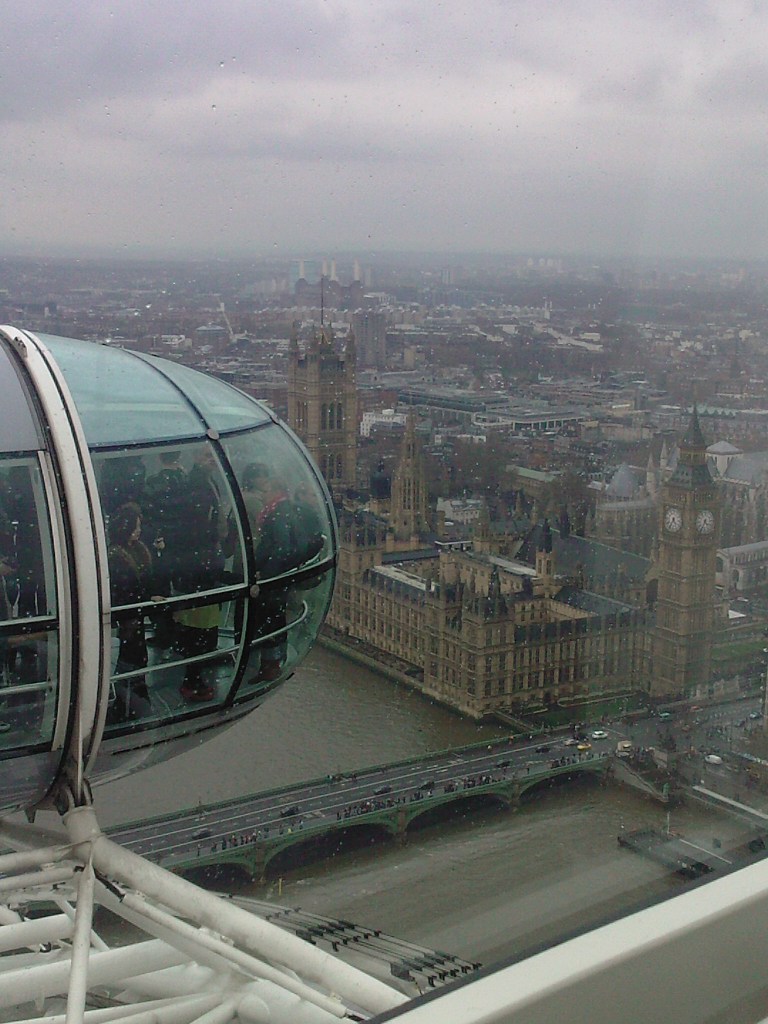
We arrived in London in October 2004, and it greeted us with relentless rain. I’m from the north of Spain—used to grey skies—but nothing prepared me for the walls of water that seem to define British autumn.
London was my first real step into adulthood: sharing a tiny studio, job-hunting, learning to navigate a city that didn’t care who you were. I went to interviews in bars, restaurants and cafés, until finally, I landed a position as a receptionist in a small three-star hotel in Paddington.
The work was hard and often thankless, but I loved it. Every day was a small window into other people’s worlds. And when you’re far from home, that matters more than you’d think.
Finding a flat was another story entirely. After weeks of searching, we managed to rent a small place—overpriced, damp, and absolutely ours. We were proud of it.
By the summer of 2005, the friend I’d moved with decided to return to Spain. I wasn’t ready to stay alone. I missed my friends, the language, the familiarity. So I packed my bags and went back too—only to realise that the Spain I’d returned to wasn’t the one I’d left.
I applied for jobs, but my nine months in London counted for nothing. Employers told me politely that experience abroad didn’t “translate.” My short time in England was, in their eyes, a gap—not a qualification.
So I did what I always did when home felt too small: I left again.
The Return—When London Became Home
By May 2006, I was back in London. I’d found a new job—this time in a slightly larger hotel—and a new sense of purpose. I moved into a room in Camden, sharing with Australians, Kiwis and Americans. The flat was chaotic, noisy, and full of life. We’d stay out late, swap stories, and laugh about how we were all just passing through.
But I wasn’t passing through. Not really. London felt like a place where I could exist as myself—not the orphan girl, not someone’s granddaughter, not a collection of tragedies. Just me.
I fell in love with the rhythm of the city—its anonymity, its pulse, the way it constantly rewrote itself. There was freedom in that. I loved how every corner spoke a different language, how every person seemed to be from somewhere else. London was messy and alive and utterly forgiving.
That same year, I met the man who would later become my husband. He was working as a luggage porter at the hotel where I was a reception team leader. We met between long shifts, disagreements at work and pints of beer in tired pubs. Slowly, he became not just my colleague but my companion—the person who made the chaos feel like home.
The Realisation—When Belonging Changed Shape
Looking back, I can see how London changed everything. It wasn’t just another stop —it was an arrival of sorts. For the first time, I wasn’t running from anything. I was running towards something.
In London, I learnt that belonging doesn’t always come from roots; sometimes it comes from rhythm—from the quiet repetition of ordinary days in a place that sees you as you are.
I fell in love not only with the city but also with what it allowed me to become. It gave me opportunities Spain never would have—a career, independence, and the chance to build a life on my own terms. It became home, not because I was born there, but because it was where I finally grew into myself.
The Reflection—What Leaving Home Really Meant
When I think back now, I realise that leaving home wasn’t only about escaping—it was also about growing. Each move, each decision, each return taught me something about what it means to belong—and what it means to let go
For years, travel was how I made sense of loss and freedom. But London was where I learnt that staying can be just as brave as leaving.
After two decades, I still call it home—not because it’s perfect, but because it’s the first place that ever felt like mine.
💌 If this story resonated, subscribe to read the next chapter—“Journeys Together,” about discovering the world alongside someone else and learning how love can change the way we travel.


 Wanderlust Reconsidered
Leave a comment